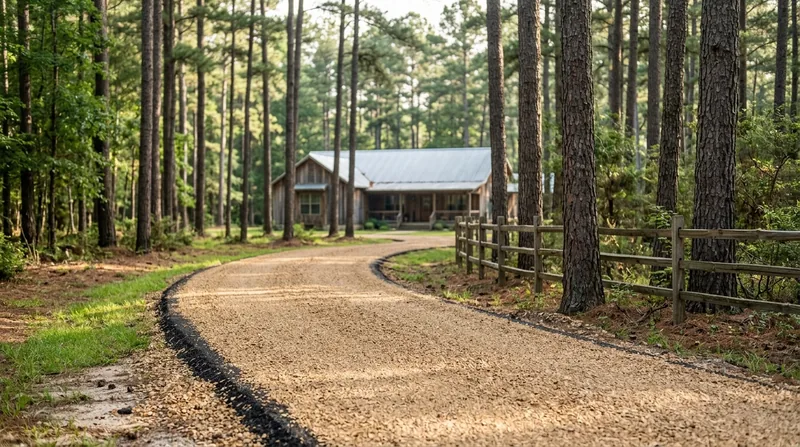




Tar & Chip Driveways in Houston deliver a low-cost, textured country finish that works well on long rural drives and ranch properties across the greater Houston area. Liquid asphalt with rolled stone chips creates natural traction, a matte appearance that does not glare in summer heat, and a surface that costs less than hot-mix asphalt paving. Houston's flat terrain, heavy clay subgrade, and intense summer sun make tar and chip a practical choice for properties north toward Conroe and Magnolia, west toward Fulshear and Waller, and across the ranchette lots beyond the Grand Parkway where gravel transitions to a more finished surface. We install new tar and chip drives and maintain existing oil-and-stone surfaces by re-chipping when the binder wears thin. Call (832) 956-1892 for a free written estimate with tonnage specs.
Why Tar & Chip Works for Houston Rural and Ranch Properties
Tar and chip surfaces sit between gravel and asphalt in cost and durability, and they suit Houston's rural landscape where long driveways cross flat property and summer heat softens conventional asphalt faster than the eye can see. The black gumbo clay that dominates Houston's subgrade swells in the wet months and shrinks in drought, putting stress on rigid pavement; tar and chip flexes with seasonal ground movement and does not require the thick base that hot-mix demands. The finish is naturally textured, provides excellent wet traction, and sheds water without ponding the way gravel does. Maintenance is straightforward: we brush and re-chip the surface every three to five years as the stone wears, which is far cheaper than grinding and replacing an asphalt drive.
- We apply liquid asphalt binder and roll in crushed stone chips to create a dense, locked surface that hardens over two to four weeks.
- The finish handles Houston's tropical downpours without washout because the binder holds the stone in place and the texture sheds water.
- Tar and chip does not require the subgrade lime stabilization that full-depth asphalt replacement demands on our clay soils.
- Re-chipping an existing tar and chip drive costs a fraction of resurfacing, making it the budget option for long ranch drives.
- The matte finish does not reflect summer heat the way fresh asphalt does, staying cooler underfoot in the 95-degree Houston summer.
This combination of low cost, durability on unstable ground, and easy maintenance makes tar and chip the standard choice for rural properties across greater Houston.
Local example: A ranch property near Magnolia with a half-mile gravel drive to the house often starts with tar and chip on the final 200 feet nearest the garage, then stays gravel beyond. As the property improves, owners extend the tar and chip surface backward, one section at a time. We maintain dozens of these driveways on the north side and beyond the Woodlands.
For more information on how to choose the right surface for your property, see our guide to Gravel Driveway Installation & Grading, which covers the transition from gravel to paved surfaces.
How We Install and Maintain Tar & Chip Driveways in Houston
Installation begins with site inspection, measurement, and a written estimate that specifies tonnage and binder volume. The existing surface must be clean and compacted; if you have an old gravel drive, we grade and compact the subgrade first. We then apply liquid asphalt binder in a controlled spray, immediately followed by rolling in the crushed stone chips with a heavy roller. The process takes one day for most residential drives, and the surface hardens over two to four weeks as the binder cures. Maintenance consists of brushing away any loose stones, filling in ruts or low spots with fresh tar and chip, and re-chipping the entire surface every three to five years depending on traffic and weather.
- We measure the drive and deliver a written estimate that lists square footage, tonnage of binder and stone, and the work sequence.
- The subgrade is inspected for compaction and drainage, and we grade and proof-roll any soft spots before applying binder.
- Liquid asphalt is sprayed in a single pass at a calibrated rate, then stone chips are immediately rolled into the wet surface with a heavy compactor.
- We leave the drive lightly posted for two to four weeks; light traffic is okay after 48 hours, but full use waits until the binder fully cures.
- Annual or biennial brushing removes loose stones and keeps the surface tight; re-chipping every three to five years restores the finish and extends the drive life.
This straightforward process keeps your drive looking finished and functional with minimal downtime and no traffic interruption during the work itself.
Houston example: A property in Cypress with a 400-foot tar and chip drive receives a full re-chip every four years. The total cost for that refresh is roughly one-third the cost of an asphalt overlay, and the drive stays in service the entire time. We schedule the work in spring or fall to avoid the summer heat and the tropical downpours.
See our full service menu at Asphalt Driveway Paving & Installation for details on how tar and chip compares to hot-mix and recycled asphalt options.
Tar & Chip Installation Methods and Materials
| Approach | Description | Best For |
|---|---|---|
| New tar and chip on prepared subgrade | Grade, compact, and proof-roll the base; spray asphalt binder; roll in stone chips in a single pass. | New ranch drives, long rural approaches, and gravel-to-paved transitions on stable ground. |
| Re-chip existing tar and chip surface | Brush loose stones, inspect the binder for integrity, apply fresh binder and stone chips over the worn surface. | Maintaining an existing tar and chip drive every three to five years; extends life at one-third the cost of overlay or replacement. |
| Tar and chip with lime-stabilized base | On Houston's black clay, mix lime into the top 4 to 6 inches of subgrade, compact, cure, then apply tar and chip. | Properties where swelling clay or poor drainage risk rutting; common on ranch drives north of the Beltway. |
| Tar and chip over milled asphalt | Mill a failed asphalt surface, compact the millings, then apply tar and chip binder and stone. | Repurposing an old asphalt drive that is too damaged for overlay but not yet at full-depth replacement cost. |
Each method is selected based on the existing surface condition, subgrade stability, and your budget. We inspect your drive on site and recommend the approach that gives the best durability for the money.
Tar & Chip Driveways Cost in Houston: What to Expect
Tar and chip drives start at $5 per square foot for new installation on a prepared subgrade, with the total cost depending on drive size, existing surface condition, and whether lime stabilization is needed. A typical 400-square-foot ranch approach runs $2,000 to $2,500 for new tar and chip; re-chipping an existing surface costs $3 to $4 per square foot because no base preparation is required. Houston's flat terrain and stable subgrade in most areas keep costs predictable, but properties on clay with poor drainage or ruts may need lime stabilization, which adds $1 to $2 per square foot. We provide a written estimate with tonnage and material specs before any work begins, and that estimate is free with no obligation to book. Factors that move the price up include drive length (longer drives mean more material and labor), existing surface condition (a rutted gravel base takes longer to prepare than a firm one), and proximity to structures or utilities (which slow the work and require careful handling).
Get a detailed estimate by calling (832) 956-1892 or visiting our pricing page for a full breakdown of tar and chip costs and what factors affect your total.
Tar & Chip Driveways Near Me: What Houston Homeowners Should Know When Hiring
Hiring the right contractor for tar and chip work starts with verifying that the company is fully insured and can provide a written estimate with tonnage and material specs. Licensing and permitting requirements vary by municipality across greater Houston; the City of Houston, Sugar Land, Katy, and other jurisdictions each set their own rules for driveway work, particularly where the drive meets the street or HOA architectural standards apply. Get at least two or three estimates so you can compare material quality, tonnage, and timeline. Ask for references from recent projects in your area, and check whether the contractor is willing to discuss subgrade preparation and base stabilization on clay soils. Many rural properties fall outside city limits, but if you are in a master-planned community like The Woodlands, Pearland, or Katy, check your HOA rules for driveway material and color before you book; some HOAs restrict tar and chip or require approval in writing.
- Verify that the contractor carries liability and workers compensation insurance and can provide a current certificate on request.
- Ask for a written estimate that specifies square footage, tonnage of binder and stone, and the timeline from start to full cure.
- Call your local building or public works department to confirm whether a permit is required for your driveway work in your jurisdiction.
- Request references from at least two similar projects completed in the last two years in your area.
- If you live in an HOA community, verify architectural guidelines with your HOA before signing a contract.
- Avoid contractors who offer unsolicited door-to-door bids, demand large cash deposits, or quote a price with no tonnage or material detail.
These steps ensure you hire a contractor who will deliver a durable drive and handle local rules correctly. Call us at (832) 956-1892 or contact us here for a free estimate with full tonnage and material specs; we have been in business since 2011 and work across Houston and the surrounding counties.
Tar & Chip Driveways in Houston: Pricing Guide
| Service | Price | Details |
|---|---|---|
| New tar and chip installation | Starting at $5/sq ft | Includes grading, compacting subgrade, asphalt binder, and rolled stone chips on a prepared base. |
| Re-chipping existing tar and chip surface | Starting at $3/sq ft | Brush and inspect existing surface, apply fresh binder and stone; no base prep needed, extends life 3 to 5 years. |
| Lime stabilization on clay subgrade | Add $1 to $2/sq ft | Mix lime into top 4 to 6 inches of Houston clay, compact and cure before tar and chip application for better stability. |
| Milling and tar and chip overlay | Starting at $4/sq ft | Mill failed asphalt, compact millings, apply tar and chip binder and stone; less costly than full-depth replacement. |
| Travel and equipment | Included | No separate mileage or equipment fee within Houston and surrounding service areas; cost is in the per-square-foot rate. |
| Free written estimate | No charge | Response within 24 hours at (832) 956-1892; includes tonnage, material specs, and timeline; no obligation to book. |
Indicative pricing, the exact cost depends on square footage, finish, and site access. Free personalized estimate within 24h at (832) 956-1892.


