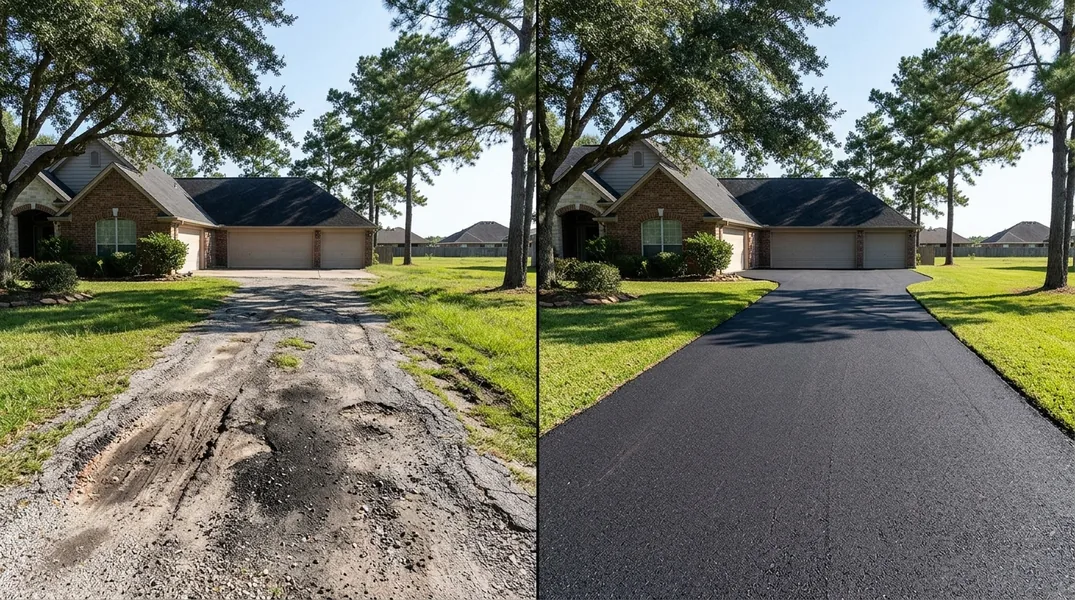
What Are Recycled Asphalt Millings?
Recycled asphalt millings, also called crushed asphalt or asphalt millings, are fragments of old asphalt pavement that have been reclaimed and broken down into smaller pieces. When existing asphalt driveways, roads, or parking lots reach the end of their lifespan, contractors remove and recycle the material rather than sending it to a landfill. The reclaimed asphalt is then crushed and screened to create uniform-sized particles that can be reused for new applications.
These millings contain the original asphalt binder, which means they have an inherent stickiness that helps the particles bond together when compacted. This self-binding quality is one of the biggest reasons property owners across Houston and surrounding areas choose millings for rural driveways and acreage access roads. Unlike gravel, which remains loose and shifts under vehicle weight, asphalt millings naturally compact and harden over time, especially in warm weather.
Why Houston Homeowners Choose Asphalt Millings Driveways
For property owners with acreage or rural land in the Houston area, an asphalt millings driveway represents a practical middle ground between gravel and full Asphalt Driveway Paving & Installation. The primary appeal is affordability. Millings cost significantly less than new asphalt paving while offering better durability and appearance than traditional gravel. The material also compacts naturally under vehicle traffic, creating a firmer, more stable surface that resists rutting and washboard effects common with loose gravel.
Another reason homeowners prefer millings is environmental responsibility. By choosing recycled material, you're diverting waste from landfills and reducing the demand for new asphalt production. This makes asphalt millings an eco-conscious choice without sacrificing functionality. Additionally, the dark color of asphalt millings blends naturally with landscaping and gives a more finished appearance than pale gravel, which many property owners find more aesthetically pleasing for their rural entrances and access roads.
Asphalt Millings Driveway Cost in Houston: What to Budget
When evaluating pricing for an asphalt millings driveway, expect to pay between $0.50 and $1.50 per square foot for material and installation, depending on depth, site preparation, and local market conditions. For a typical 500-square-foot rural driveway, you're looking at roughly $250 to $750 for materials and labor. This is substantially lower than full asphalt paving, which typically costs $2 to $5 per square foot or more. The exact cost depends on factors like the current condition of your property, how much grading or site prep is needed, and the thickness of millings you choose to apply.
The depth of millings you apply affects both cost and longevity. A 2-inch layer is standard for light-to-moderate traffic areas, while heavily trafficked access roads may benefit from 3 to 4 inches. Thicker applications cost more upfront but provide longer-lasting results and better compaction. Keep in mind that millings driveways typically require periodic maintenance, such as raking and adding fresh material every few years to maintain optimal compaction and appearance. For a detailed cost breakdown specific to your property, contact Houston Asphalt Paving at (832) 956-1892 or request a free estimate today.
Advantages and Limitations of Crushed Asphalt Driveways
Crushed asphalt driveways offer several genuine advantages that explain their popularity among rural property owners. The self-binding nature of the material means it hardens and compacts naturally over time, especially during warm months. This creates a more stable surface than gravel while remaining permeable, allowing water to drain properly and reducing puddle formation. The dark color also hides dirt and tire marks better than light-colored gravel, keeping your driveway looking cleaner with less frequent maintenance. Additionally, recycled asphalt millings are readily available and can be installed relatively quickly compared to pouring and curing new asphalt.
However, asphalt millings do have limitations homeowners should understand. In very hot weather, the surface can become slightly sticky or soft if you park a vehicle for extended periods. Cold climates present the opposite challenge, as millings don't bond as effectively in freezing temperatures. The material also requires occasional raking and topping off every two to three years to maintain compaction and fill in areas worn by traffic. If you live in an area with heavy rainfall or flooding, millings may not be ideal because the material can scatter or wash away during extreme weather. For properties requiring a more permanent, low-maintenance solution, professional Asphalt Driveway Paving & Installation remains the superior choice.
Proper Installation and Maintenance of Millings Driveways
Correct installation is essential for maximizing the lifespan of your asphalt millings driveway. The process begins with site preparation, which includes grading and compacting the subgrade to ensure proper drainage and a stable foundation. The recycled asphalt is then spread to the desired depth, typically 2 to 4 inches, and compacted using a roller or heavy equipment. Proper compaction is critical because it activates the binding properties of the asphalt and creates a cohesive surface. Many property owners make the mistake of skipping compaction or applying insufficient depth, which leads to premature deterioration and increased maintenance needs.
Once installed, maintaining your millings driveway involves regular raking to redistribute material and promote even compaction, especially after rain or heavy vehicle traffic. You should rake the surface at least twice a year or whenever you notice ruts or bare spots developing. Every two to three years, add a fresh layer of millings, typically 1 to 2 inches, to replace material that has worn away or scattered. During winter months in cooler climates, avoid using salt-based de-icers on millings driveways, as these can degrade the asphalt binder. If your property experiences significant drainage issues or heavy traffic, you may want to consult with a professional about whether Asphalt Resurfacing & Overlay services might eventually be a better long-term investment.
When to Choose Professional Installation for Your Millings Driveway
While some property owners attempt DIY installation of asphalt millings, hiring a professional contractor ensures proper site preparation, correct compaction, and optimal results. Professional installers have access to heavy equipment like plate compactors and rollers that homeowners typically lack, and they understand local soil conditions and drainage requirements that affect driveway longevity. In the Houston area, where soil composition and drainage patterns can vary significantly across properties, professional assessment is particularly valuable. A contractor can evaluate your specific site and recommend the appropriate depth, material grade, and preparation method for your situation.
Houston Asphalt Paving specializes in driveway solutions tailored to residential and rural properties throughout the region. Whether you're considering an asphalt millings driveway for your acreage or exploring other options, our team can provide expert guidance and professional installation. Contact us at (832) 956-1892 or submit a free estimate request to discuss your project. We'll assess your property, explain the pros and cons of various driveway materials, and help you choose the solution that best fits your budget and long-term needs.
Looking for a professional asphalt paving contractor in Houston? Houston Asphalt Paving responds fast for all your asphalt paving needs.
Get a Free Quote